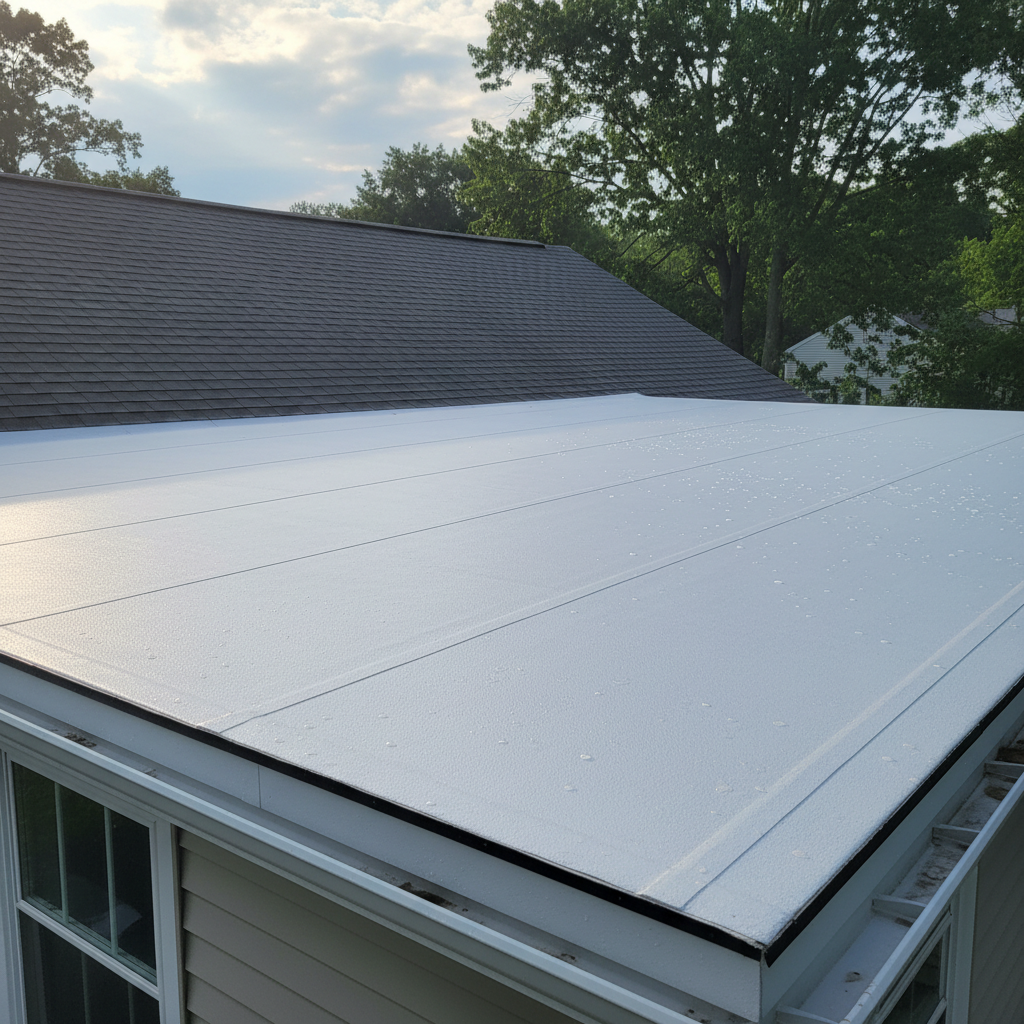
What exactly is TPO roofing, and why should I care?
Alright, let's cut to the chase. TPO stands for Thermoplastic Polyolefin. It's a single-ply membrane, meaning it's one layer of synthetic material that's rolled out and attached to your commercial roof. Think of it like a super-durable, flexible sheet that covers your entire roof deck. Why should you care? Well, for commercial buildings, especially those with low-slope or flat roofs, TPO has become one of the most popular choices out there. It's known for being tough, energy-efficient, and pretty cost-effective in the long run. I've seen it perform really well on everything from small office buildings to larger industrial spaces right here in East Greenwich.
How long can I expect a TPO roof to last here in Rhode Island?
That's a fair question, and it's one of the first things business owners ask me. Generally, a properly installed TPO roof from a reputable outfit like Champion Roofing & Siding can last anywhere from 15 to 25 years, sometimes even longer. Now, that lifespan depends on a few things. The quality of the material itself is huge – not all TPO is created equal. Installation quality is paramount; if it's not sealed right, you're asking for trouble. And then there's maintenance. Even though TPO is low-maintenance, a little bit of care goes a long way. Our crazy Rhode Island weather, with those harsh winters and humid summers, can be tough on any roof. But TPO handles those temperature swings pretty well thanks to its flexibility.
Is TPO really energy-efficient? Will it save me money on my utility bills?
Absolutely, it can be. This is one of TPO's big selling points, especially for commercial properties. Most TPO membranes come in light colors, like white or light gray. These colors are highly reflective, meaning they bounce a lot of the sun's UV rays away from your building instead of absorbing them. Think about wearing a black shirt versus a white shirt on a sunny day – same principle. This reflectivity helps keep your building cooler in the summer, which means your air conditioning system doesn't have to work as hard. Over time, that can translate into some noticeable savings on your energy bills, particularly for larger commercial spaces.
What about repairs? Is TPO easy to fix if something goes wrong?
Yes, repairs on TPO are generally pretty straightforward, which is another reason it's so popular. If you get a puncture or a tear, a skilled technician can usually clean the area and then weld a new piece of TPO right over the damaged spot. Because it's a thermoplastic, the material can be heat-welded, creating a strong, seamless bond. This means you don't typically need to replace large sections of the roof for a small issue. Of course, the sooner you catch a problem, the easier and cheaper it is to fix. Regular inspections are key to spotting those minor issues before they become major headaches.
How does TPO stand up to East Greenwich's weather, like heavy snow and strong winds?
It holds up pretty darn well, actually. We get our fair share of nor'easters and blustery coastal winds around here, and TPO is built to handle it. Its single-ply construction means fewer seams than some other roofing types, and those seams are heat-welded, making them incredibly strong and watertight. As for snow, TPO is a smooth surface, so snow tends to slide off more easily than with granular surfaces. Plus, its flexibility helps it withstand the expansion and contraction that comes with our wild temperature swings, preventing cracking. You'll still want to make sure your drainage is good, especially with the heavy rains we sometimes get after a big snowmelt, but the membrane itself is tough.
Is TPO a good option for every commercial building, or are there situations where it's not ideal?
Look, no roofing material is a one-size-fits-all solution, and TPO is no exception. It's fantastic for most low-slope and flat commercial roofs. It's durable, energy-efficient, and relatively easy to maintain and repair. However, if your roof has a lot of penetrations – like skylights, HVAC units, vents, and pipes – the installation can become more complex and time-consuming, which can drive up the cost. Also, if your building has a very high amount of foot traffic on the roof for maintenance or other reasons, you might consider a thicker TPO or a different system altogether, as constant heavy traffic can wear down any membrane over time. For most commercial properties in our area, though, it's a solid choice.
What's the typical cost comparison for TPO versus other commercial roofing options?
This is where it gets a little nuanced because costs fluctuate, but I can give you a general idea. TPO is usually very competitive, often falling in the mid-range for commercial roofing systems. It's typically more expensive upfront than, say, a modified bitumen roof, but often less than a full EPDM system or a built-up roof (BUR). Where TPO really shines in cost-effectiveness is its long-term value. Its energy efficiency can lead to those lower utility bills we talked about, and its durability means fewer major repairs over its lifespan. Plus, installation is often quicker than multi-ply systems, which can save on labor costs. When we give you a quote at Champion Roofing & Siding, we're always breaking down the full picture, not just the initial sticker price, so you know exactly what you're getting into.