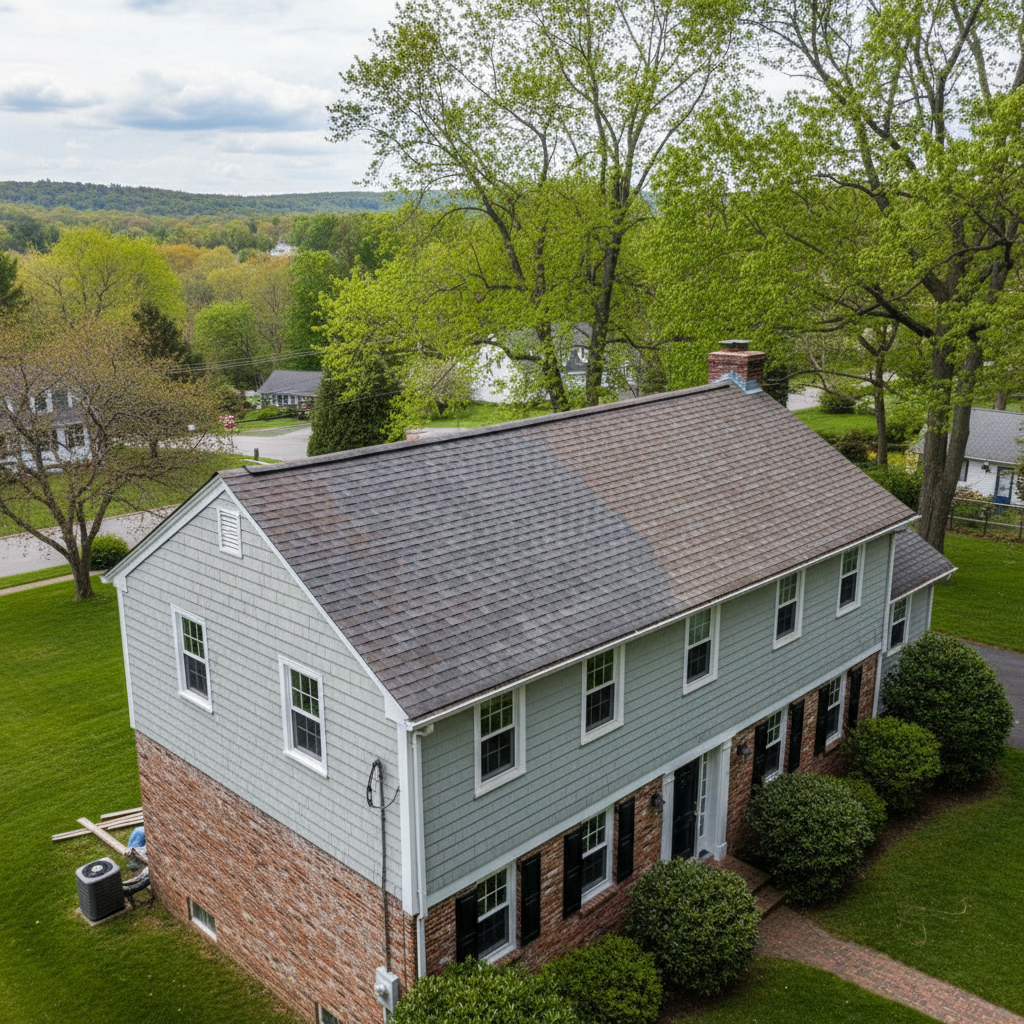
That nor'easter that just blew up Narragansett Bay did not do your roof any favors. If you live down on Crompton Avenue or up near Frenchtown Road, you already know how brutal our Rhode Island weather can get when winter storms or heavy spring squalls roll through. Wind whips off the water, heavy wet snow stacks up fast, and suddenly you are staring at water stains on your ceiling.
Here is what you need to know about handling storm damage and keeping your place solid.
Spotting the Early Warning Signs
You do not always need a massive leak to know you have got trouble. After a heavy blow, walk around your yard and look up. Missing shingles are the obvious giveaway, but keep an eye out for granules piling up in your gutters. That means your shingles are taking a beating and losing their armor. Inside the attic, use a flashlight on the rafters right after a rainstorm. Fresh damp spots or daylight showing through the roof deck mean you need to act before wood rot sets into our local damp framing lumber.
What Regular Maintenance Looks Like
An ounce of prevention saves thousands in repairs around here. Clean your gutters twice a year because clogged runs will back water right up under your eaves when the next freeze hits. Trim back those heavy oak and maple branches hanging over your roofline. When ice storms hit East Greenwich, heavy limbs snap and take chunks of shingle and plywood right along with them. Keep an eye on your flashing around chimneys and vent pipes too. That is usually where water finds its way in first.
Extending the Life of Storm Repairs
When you patch up storm damage, you want it to last. Do not just slap some caulk on a broken shingle and call it a day. Make sure underlayment and ice and water shield are installed properly, especially given how our freeze-thaw cycles test every square inch of a roof. At Champion Roofing & Siding, we always use high-grade materials rated for coastal winds because standard builder-grade stuff just does not hold up to a true New England gale.
When to Call a Professional
Some homeowner DIY projects make sense, but climbing a ladder onto a slick, storm-damaged roof is not one of them. Call a pro if you see sagging rooflines, major shingle loss across multiple slopes, or if water is actively pouring into your living space. We can tarp things down safely, document the damage for your insurance claim, and get permanent fixes in place before the next storm system moves up the coast.